
A practical guide to understanding ROMI, CPA, LTV, CTR, and other essential marketing metrics—without getting lost in vanity numbers.
Marketing Isn’t About More Traffic—It’s About More Profit
Many business owners hire a marketing agency, freelancer, or in-house specialist with one goal in mind: growing the business.
After a few weeks, the reports begin to arrive.
You see numbers like:
- 125,000 impressions
- 18,000 website visitors
- 3.8% CTR
- 9,500 social media likes
- 2,000 new followers
Everything looks impressive.
But one important question remains unanswered:
“How much money did the business actually make?”
This is one of the most common problems in digital marketing. Businesses celebrate numbers that look good in reports but have little impact on revenue.
To make informed decisions, you don’t need to become a data analyst. You simply need to understand a handful of key metrics that directly influence profitability.
Let’s examine the numbers every business owner should monitor—and the ones that often create a false sense of success.
The Difference Between Vanity Metrics and Business Metrics
Not every metric deserves equal attention.
Some numbers are interesting.
Others are essential.
Vanity Metrics
These metrics often look impressive but don’t necessarily indicate business success.
Examples include:
- Social media followers
- Page likes
- Post reach
- Video views
- Website sessions
- Impressions
These figures can support brand awareness, but they don’t automatically generate sales.
Business Metrics
Business metrics help answer critical questions:
- Are we making money?
- Are we attracting profitable customers?
- Is our advertising budget working?
- Should we invest more—or less?
These are the numbers that guide smart business decisions.
ROMI: Return on Marketing Investment
ROMI measures how much revenue your marketing generates compared to what you spend.
It answers the question:
“Was this marketing campaign profitable?”
Imagine you spend:
- $2,000 on advertising
The campaign generates:
- $10,000 in revenue
Assuming healthy profit margins, that’s likely a successful investment.
A positive ROMI indicates that your marketing is contributing to business growth.
A negative ROMI suggests your campaigns require optimization.
As a business owner, this is one of the most important numbers to review regularly.
CPA: Cost Per Acquisition
CPA tells you how much it costs to acquire one new customer.
For example:
Advertising spend:
$1,000
New customers:
20
CPA:
$50 per customer
The lower your acquisition cost—while maintaining quality—the more efficient your marketing becomes.
However, a lower CPA isn’t always better.
If higher-value customers cost more to acquire but generate significantly greater revenue, paying more may be worthwhile.
Always evaluate CPA alongside customer value.
LTV: Customer Lifetime Value
LTV measures the total revenue or profit a customer generates throughout their relationship with your business.
Consider two examples.
Customer A
Buys once for $100.
Customer B
Spends:
- $100 today
- $200 next month
- $300 next year
Customer B has a much higher lifetime value.
Businesses with strong LTV can afford higher advertising costs because customers continue purchasing over time.
Improving customer retention often increases profitability more than constantly finding new customers.
CTR: Click-Through Rate
CTR measures how often people click your advertisement after seeing it.
For example:
An advertisement appears 10,000 times.
Three hundred people click.
CTR:
3%.
A high CTR usually suggests:
- Relevant messaging
- Strong headlines
- Attractive visuals
- Effective targeting
However, CTR alone doesn’t guarantee sales.
Many clicks don’t always lead to more customers.
Think of CTR as a measure of interest—not profitability.
Conversion Rate
Your conversion rate shows how many visitors complete your desired action.
Examples include:
- Purchasing a product
- Requesting a quote
- Booking a consultation
- Completing a contact form
Example:
1,000 visitors
40 inquiries
Conversion rate:
4%
Improving conversion rates often delivers better returns than simply increasing website traffic.
Small changes to landing pages, calls-to-action, or forms can dramatically improve performance.
Cost Per Lead (CPL)
Many service businesses don’t sell directly online.
Instead, they generate leads.
CPL measures how much each qualified inquiry costs.
Example:
Advertising spend:
$500
Generated leads:
25
CPL:
$20
Track not only the number of leads but also their quality.
Cheap, unqualified leads often waste valuable sales time.
Customer Acquisition Cost (CAC)
CAC measures the total cost of gaining a customer, including:
- Advertising
- Marketing software
- Agency fees
- Salaries
- Sales expenses
Understanding CAC provides a complete picture of how much growth truly costs.
If acquiring customers costs more than they generate, the business model becomes unsustainable.
Bounce Rate
Bounce rate measures how many visitors leave your website without interacting.
A high bounce rate may indicate:
- Slow loading speed
- Poor design
- Weak messaging
- Irrelevant traffic
- Confusing navigation
While bounce rate isn’t always negative—for example, when visitors quickly find the information they need—it often signals opportunities for improvement.
Website Traffic
Traffic matters.
But only when it’s qualified.
Imagine these scenarios.
Website A receives:
50,000 visitors
50 customers
Website B receives:
5,000 visitors
250 customers
Which business performs better?
The second.
Qualified traffic always outperforms large volumes of uninterested visitors.
Never judge marketing success by traffic alone.
Which Metrics Matter Most?
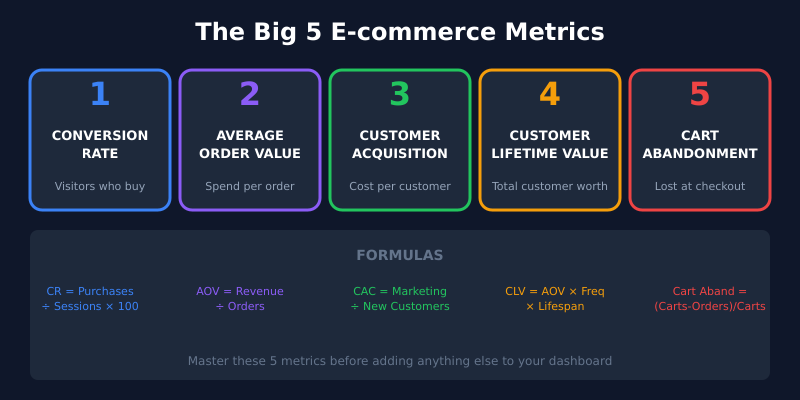
For most businesses, these numbers deserve regular attention.
Revenue
Is the business growing?
Leads
How many qualified inquiries are generated?
Conversion Rate
How effectively does your website turn visitors into customers?
CPA
How much does each customer cost?
LTV
How valuable is each customer over time?
ROMI
Is marketing producing profitable returns?
Everything else should support these core business outcomes.
Metrics That Often Mislead Business Owners
Be cautious about celebrating:
- Thousands of followers
- Viral videos
- High page views
- Large impression counts
- Likes and reactions
- Comments
These numbers can support marketing objectives.
However, if they don’t increase:
- Revenue
- Qualified leads
- Customer retention
- Profit
they shouldn’t be your primary focus.
Popularity isn’t the same as profitability.
Questions Every Business Owner Should Ask Their Marketing Team
Instead of asking:
“How many clicks did we get?”
Ask:
- How many qualified leads did we generate?
- How many became paying customers?
- What’s our acquisition cost?
- Which channel generates the highest return?
- Which campaigns should receive more budget?
- Which campaigns should be paused?
- How has revenue changed compared to last month?
These questions shift conversations from activity to results.
Monthly Marketing Dashboard
Review these numbers every month.
Revenue
✔ Total sales
✔ Revenue growth
Lead Generation
✔ Qualified leads
✔ Cost per lead
✔ Lead-to-customer rate
Advertising
✔ CPA
✔ ROMI
✔ Best-performing campaigns
Website
✔ Conversion rate
✔ Bounce rate
✔ Landing page performance
Customer Retention
✔ Repeat purchases
✔ Customer lifetime value
✔ Referral customers
Growth
✔ Organic traffic
✔ Email subscribers
✔ Google reviews
✔ Returning customers
A simple dashboard often provides better insights than dozens of complicated reports.
Common Mistakes Business Owners Make
Avoid these pitfalls:
- Focusing only on website traffic
- Judging success by social media followers
- Ignoring customer lifetime value
- Tracking too many metrics
- Making decisions without enough data
- Comparing campaigns with different objectives
- Expecting instant results from long-term strategies like SEO
Marketing should be evaluated by business outcomes—not by impressive-looking charts.
Build a Data-Driven Marketing Culture
The best businesses don’t make marketing decisions based on opinions—they rely on measurable results.
Create a routine where marketing performance is reviewed consistently:
- Set clear goals before launching campaigns.
- Track a small set of meaningful KPIs.
- Compare results month over month, not day by day.
- Identify what generated profitable customers—not just traffic.
- Reinvest in the channels that consistently produce the best return.
This approach helps eliminate guesswork and ensures your marketing budget is allocated where it creates the greatest impact.
Final Thoughts
Digital marketing generates an enormous amount of data, but successful business owners understand that not every number deserves equal attention. While impressions, likes, followers, and clicks can provide useful context, they don’t pay salaries, cover operating expenses, or grow your business.
The metrics that truly matter are the ones connected directly to profitability: how much it costs to acquire a customer, how much that customer is worth over time, how effectively your website converts visitors into leads, and whether your marketing investment is generating a positive return.
You don’t need to monitor dozens of complex reports to make smarter decisions. A simple dashboard focused on ROMI, CPA, LTV, conversion rate, and qualified leads will tell you far more about the health of your marketing than a presentation full of vanity metrics.
Ultimately, great marketing isn’t measured by how busy it looks—it’s measured by how much sustainable profit it creates. When you shift your attention from impressive statistics to meaningful business outcomes, you’ll have clearer conversations with your marketing team, make more confident investment decisions, and build a marketing strategy that supports long-term growth rather than short-term appearances.