Guide potential customers from their first ad click to repeat purchases using lead magnets, email marketing, and automated messaging.
Why Most Businesses Lose Potential Customers
Imagine you spend money on Google Ads or Facebook campaigns. Visitors click your ad, browse your website for a minute or two, and then leave without making a purchase or contacting you.
What happens next?
For many businesses, the answer is simple: nothing.
The opportunity is lost forever.
The reality is that most people don’t buy the first time they discover a business. They compare options, read reviews, ask for recommendations, and often postpone their decision for days—or even weeks.
This is where a sales funnel becomes invaluable.
Instead of hoping visitors will buy immediately, a well-designed funnel keeps the conversation going. It captures contact information, builds trust over time, and guides prospects toward becoming paying customers—and eventually loyal, repeat buyers.
The best part? Your first sales funnel doesn’t have to be complicated. With a few essential components, even a small business can automate lead generation and nurture prospects around the clock.
What Is a Sales Funnel?
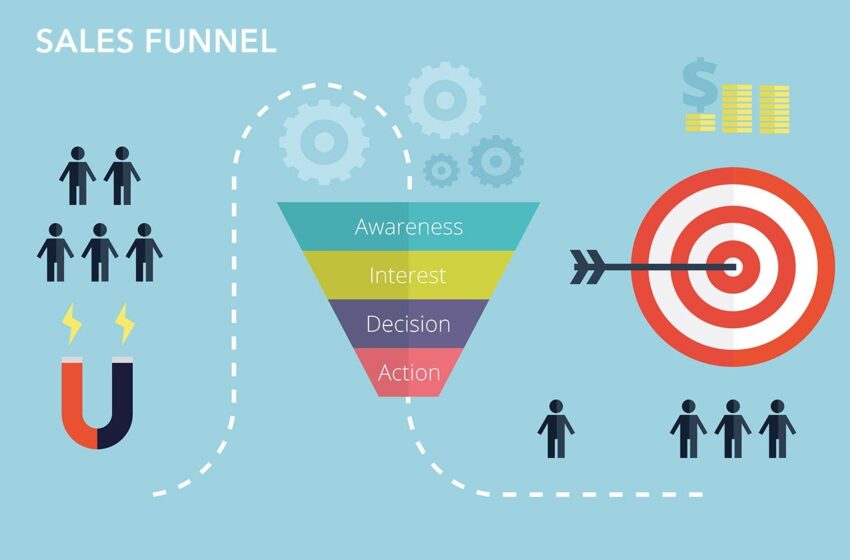
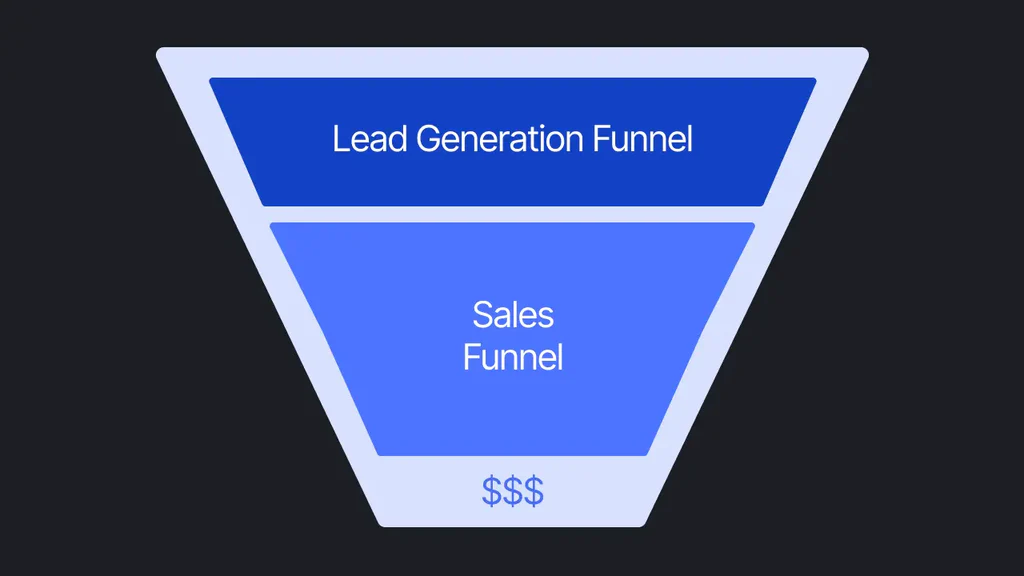
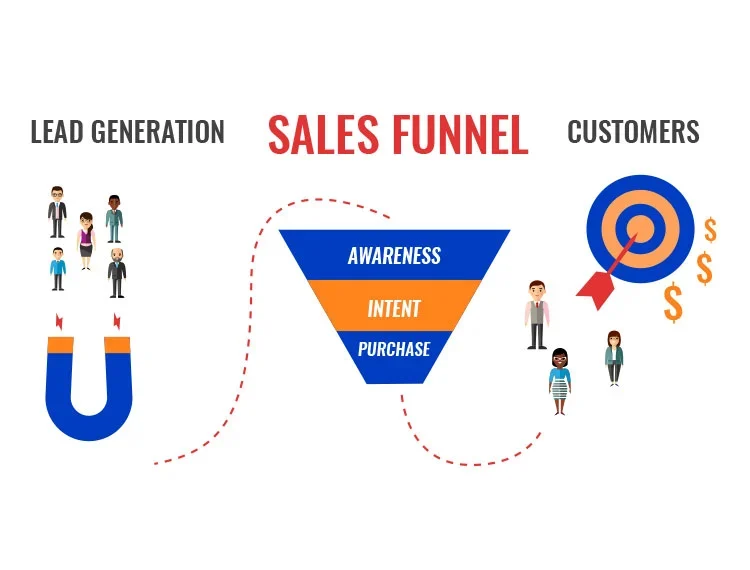
A sales funnel is the journey a potential customer takes from discovering your business to making a purchase—and ideally returning for future business.
Rather than relying on a single interaction, the funnel gradually builds trust through valuable communication.
A simple funnel looks like this:
Advertisement → Landing Page → Lead Magnet → Contact Information → Email or Messenger Follow-Up → Consultation or Purchase → Customer Retention → Repeat Purchase → Referral
Each step moves the prospect closer to becoming a customer.
Why Automation Matters
Business owners often spend too much time answering the same questions repeatedly.
Examples include:
- How much does your service cost?
- What happens after I contact you?
- How long does the process take?
- What makes your company different?
Automation helps answer these questions consistently while allowing your team to focus on qualified leads.
Benefits include:
- Faster response times
- Consistent communication
- Better customer experience
- Higher conversion rates
- Less manual work
- More predictable sales
Automation doesn’t replace personal interaction—it ensures every lead receives attention.
Step 1: Attract the Right Audience
Every sales funnel begins with traffic.
Potential customers need a reason to visit your website.
Common traffic sources include:
- Google Ads
- Facebook Ads
- Instagram Ads
- LinkedIn Ads
- SEO
- Google Business Profile
- Blog content
- YouTube videos
- Social media
The quality of your funnel depends heavily on the quality of your traffic.
Highly targeted visitors produce better conversion rates than large amounts of untargeted traffic.
Step 2: Create a Dedicated Landing Page
Never send advertising traffic to a generic homepage.
Instead, create a landing page focused on one specific offer.
Your landing page should include:
- A clear headline
- A compelling value proposition
- Customer testimonials
- Trust indicators
- A strong call-to-action
- A simple contact form
Remove unnecessary distractions.
Every element should encourage visitors to take one specific action.
Step 3: Offer a Valuable Lead Magnet
Many visitors aren’t ready to buy immediately.
Instead of losing them, offer something valuable in exchange for their contact information.
This is called a lead magnet.
Examples include:
For Service Businesses
- Free consultation
- Website audit
- SEO audit
- Marketing strategy session
- Cost estimate
- Home inspection checklist
For Ecommerce
- Discount coupon
- Free shipping
- Buying guide
- Product comparison
- Exclusive member pricing
For B2B Companies
- Industry report
- White paper
- Case study
- ROI calculator
- Business template
A good lead magnet solves a small but meaningful problem while introducing prospects to your expertise.
Step 4: Capture Contact Information
Once someone requests your lead magnet, ask only for the information you truly need.
For most businesses:
- Name
- Email address
Optionally:
- Phone number
- Company name
Avoid lengthy forms.
Every additional field reduces completion rates.
The goal is to begin a relationship—not collect unnecessary data.
Step 5: Send an Immediate Welcome Message
The moment someone submits their information, they should receive an automated response.
Your welcome email might include:
- A thank-you message
- The promised lead magnet
- A brief introduction
- Expectations for future emails
- A clear next step
Example:
Thank you for requesting our Website Conversion Checklist. You can download it below. Over the next few days, we’ll also share practical tips that have helped businesses generate more qualified leads online.
Prompt communication builds confidence.
Step 6: Nurture Leads with Email Marketing
Most purchases require multiple interactions.
Email allows you to educate prospects without being intrusive.
A simple nurturing sequence might look like this:
Email 1
Deliver the lead magnet.
Email 2
Share useful educational content.
Example:
Common Website Mistakes That Reduce Sales
Email 3
Present a customer success story.
Show measurable results.
Email 4
Answer frequently asked questions.
Address common objections.
Email 5
Invite the prospect to schedule a consultation or request a quote.
Each email should provide genuine value rather than constant sales pitches.
Trust develops through helpful communication.
Step 7: Use Messenger Automation
Many customers prefer messaging apps over email.
Platforms such as:
- Facebook Messenger
- WhatsApp Business
- Instagram Direct Messages
allow businesses to automate:
- Appointment confirmations
- Frequently asked questions
- Follow-up reminders
- Promotional updates
- Customer support
Messenger conversations often achieve higher open rates than traditional email.
Offer customers their preferred communication channel whenever possible.
Step 8: Build Trust Throughout the Funnel
Every interaction should reinforce your credibility.
Include:
- Google Reviews
- Customer testimonials
- Case studies
- Before-and-after examples
- Portfolio samples
- Certifications
- Industry awards
Trust reduces hesitation.
People buy when they feel confident.
Step 9: Make the Buying Process Simple
Many businesses lose customers during the final step.
Common obstacles include:
- Complicated forms
- Hidden pricing
- Slow responses
- Confusing checkout processes
- Too many decisions
Reduce friction by:
- Providing clear pricing where appropriate
- Offering online scheduling
- Responding quickly
- Keeping forms short
- Making payment straightforward
The easier it is to buy, the more customers will complete the process.
Step 10: Continue Marketing After the Sale
The sales funnel doesn’t end with the first purchase.
In fact, retaining existing customers is often more profitable than acquiring new ones.
Follow up with:
- Thank-you emails
- Product tips
- Maintenance reminders
- Exclusive offers
- Loyalty discounts
- Customer surveys
Satisfied customers are also more likely to leave reviews and refer others.
Repeat business often has the highest return on investment.
A Simple Sales Funnel Example
Imagine a local web design agency.
Step 1
A business owner searches Google for:
“Website design for small businesses”
Step 2
They click a Google Ad.
Step 3
They land on a dedicated page offering:
Free Website Performance Audit
Step 4
They enter:
- Name
Step 5
They immediately receive:
- Their audit guide
- A welcome email
Step 6
Over the next week they receive:
- Website optimization tips
- Client success stories
- SEO advice
- A consultation invitation
Step 7
They schedule a free strategy call.
Step 8
They become a customer.
Step 9
After project completion they receive:
- A satisfaction survey
- A review request
- Maintenance recommendations
- Future upgrade offers
One customer journey becomes an ongoing business relationship.
Common Sales Funnel Mistakes
Avoid these frequent errors:
- Sending paid traffic to your homepage
- Offering no lead magnet
- Asking for too much information
- Never following up
- Sending only promotional emails
- Ignoring customer objections
- Responding slowly to inquiries
- Failing to nurture existing customers
Small improvements at each stage can dramatically increase overall conversions.
Sales Funnel Checklist
Traffic
✔ Target the right audience
✔ Choose the appropriate advertising channels
✔ Use compelling offers
Landing Page
✔ Clear headline
✔ Strong value proposition
✔ Testimonials
✔ Simple contact form
✔ Single call-to-action
Lead Generation
✔ Valuable lead magnet
✔ Short opt-in form
✔ Immediate confirmation
Follow-Up
✔ Automated welcome email
✔ Educational email sequence
✔ Messenger automation
✔ Appointment reminders
Sales
✔ Fast responses
✔ Clear pricing
✔ Easy booking process
✔ Customer-focused communication
Retention
✔ Thank-you emails
✔ Review requests
✔ Loyalty offers
✔ Repeat purchase campaigns
Final Thoughts
Lead generation isn’t about convincing every visitor to buy immediately—it’s about creating a structured journey that builds trust, delivers value, and keeps your business connected with potential customers until they’re ready to make a decision.
A simple sales funnel doesn’t require expensive software or complex automation. It starts with attracting the right audience, offering something genuinely useful, collecting contact information with minimal friction, and maintaining meaningful communication through email or messaging. Each step removes uncertainty and moves prospects closer to becoming loyal customers.
Perhaps the greatest advantage of a well-designed funnel is that it continues working long after the initial setup. While you focus on serving existing clients, your marketing system can educate new prospects, answer common questions, schedule consultations, and encourage repeat business automatically.
If you’re just getting started, don’t try to build the perfect funnel overnight. Launch a simple version with one landing page, one lead magnet, and a short email sequence. Measure the results, refine each step, and improve it over time. Even a basic, well-optimized funnel can become one of the most valuable assets in your digital marketing strategy, generating consistent leads and supporting sustainable business growth.